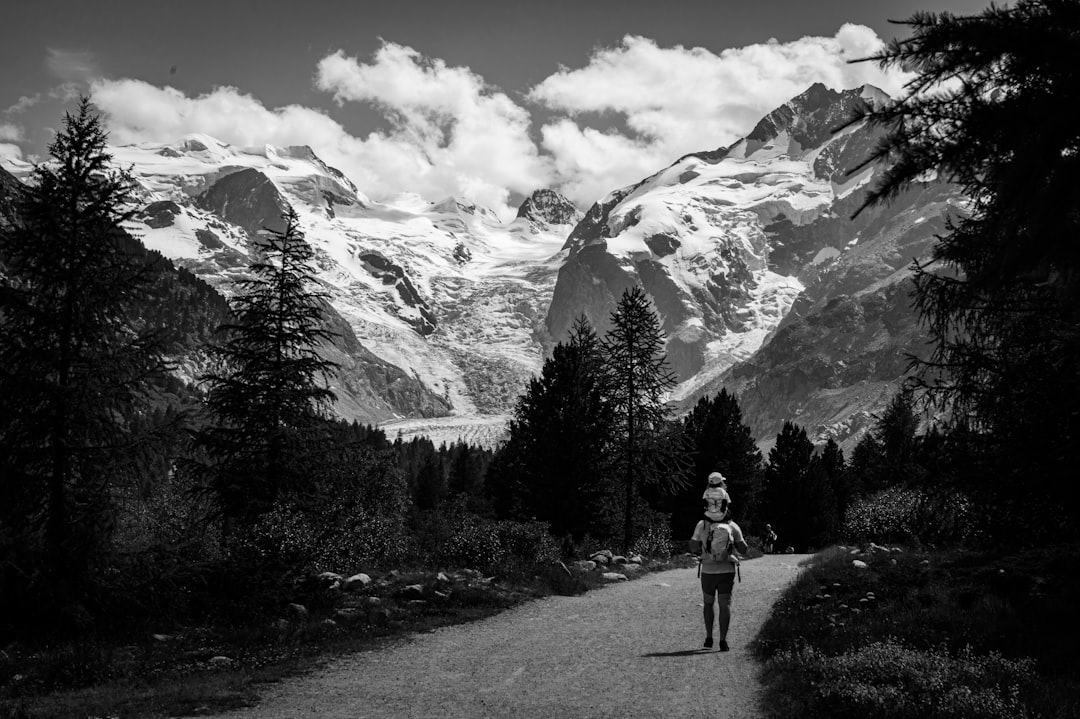
Cover photo by Sebastiano Corti
A family hike can be one of the simplest ways to spend a day together: fresh air, movement, changing scenery and enough distance from ordinary routines to make conversation feel different. It can also become stressful surprisingly quickly when the route is too ambitious, the weather changes, someone is hungry or a child simply decides that another kilometre is not happening. The answer is not to carry specialist equipment for every possible emergency or to avoid mountains altogether. It is to plan around the abilities of the least experienced person in the group, leave generous margins and accept that a successful outing may be shorter than the route you originally imagined. With children especially, the quality of the day matters more than the distance covered. A walk that ends while everyone still has energy is far more likely to create enthusiasm for the next one than a heroic push to reach a summit at any cost.
Choose the route for the child, not the adult
Adults tend to judge a walk by distance and elevation, while children experience it through steep steps, slippery ground, boredom, temperature and how long it has been since the last snack. A route that looks easy on a map can still be demanding for shorter legs. Start with a walk comfortably below what you think the family could manage, especially if you do not yet know how a child responds to longer climbs. Look for obvious turnaround points, toilets, shelter and places to stop. Circular routes can be satisfying, but an out-and-back path has one useful advantage: you can turn around whenever energy starts dropping without feeling that the whole plan has failed. Ask older children what kind of walk sounds interesting to them. A waterfall, lookout, hut, lake or unusual rock can provide a clearer purpose than simply covering kilometres. When children have some ownership of the destination, the hike becomes a shared activity rather than something being imposed on them.
Treat weather as part of the route
Mountain weather can feel different from conditions in a nearby town, and even modest hills can be windy, wet or much cooler than the car park. Check a reliable local forecast before leaving and again on the morning of the trip. Pay particular attention to rain, thunderstorms, strong wind, heat and how quickly conditions are expected to change. Pack layers that can be added or removed rather than one heavy garment, and bring rain protection when the forecast justifies it. Sun protection matters too, especially on exposed routes. If conditions are worse than expected, shorten the plan or choose another activity. Children learn something useful from seeing adults change plans because the environment changed. It teaches that outdoor competence is not about stubbornly continuing. It is about making decisions that keep the day enjoyable and safe. A cancelled summit is not wasted effort if the family still gets a short walk, picnic or visit somewhere nearby.
Make food, water and pauses predictable
Hunger has an impressive ability to transform a pleasant family walk into a negotiation. Bring familiar food that is easy to eat and does not require elaborate preparation. Sandwiches, fruit, crackers, cheese, nuts where appropriate and a small treat can work well. Carry enough water for the conditions and distance, and encourage regular drinking rather than waiting until someone becomes very thirsty. Build pauses into the plan before they are demanded. A five-minute stop at a viewpoint or bench can reset the mood and lets children associate hiking with noticing things rather than continuously marching. Avoid using food as a bribe for every kilometre, but there is nothing wrong with making a favourite snack part of the outing. Younger children may also enjoy small observational games, such as finding different leaf shapes or choosing the best picnic rock. These activities make the pace naturally slower, which often suits a family hike better than trying to maintain an adult walking speed.
Have a simple separation plan
Busy trails, wooded sections and moments of distraction make it possible for family members to lose sight of one another. Before walking, explain one simple rule appropriate to the child’s age: if you cannot see the group, stop where you are unless the location itself is unsafe. Adults should also avoid allowing one person to race far ahead while another falls behind with a tired child. In a larger group, designate who is at the front and who stays at the back. Older children can carry a whistle and know when it should be used. Make sure at least one adult has a charged phone, but do not assume there will always be reception. Tell someone outside the group where you are going if the route is remote. These measures are intentionally uncomplicated. The goal is not to make children anxious about getting lost. It is to give everyone a clear response so that a brief separation does not become more difficult because each person starts moving in a different direction.
Finish before everyone is exhausted
A common mistake is using the first half of the walk to decide how far the family can go. Energy on the outward journey does not tell you how the return will feel after several hours. Turn around while people still have something left. This can be especially important in heat, at altitude or on routes where the descent is technically harder than the climb. Keep an eye on mood as well as physical tiredness. Repeated stumbling, unusual quietness, irritability or loss of interest may simply mean it is time for a longer break or an earlier finish. Once back at the car or transport, have dry clothing, water and an easy snack available. Avoid immediately evaluating performance. A child does not need to hear that they could have walked farther or should have complained less. Talk instead about what was enjoyable, surprising or worth doing again. That helps build confidence and makes outdoor activity feel like part of family life rather than a test.
Conclusion
The best family mountain days usually contain more margin than ambition. Choose a route that suits the least experienced walker, prepare for realistic weather, make food and breaks easy, and agree on what happens if anyone becomes separated. Most of all, be willing to shorten the plan. Children do not need to reach an impressive summit to gain something from being outdoors. A manageable walk with good conversation, a picnic and enough energy left for the journey home can be exactly the kind of experience that makes everyone want to return.