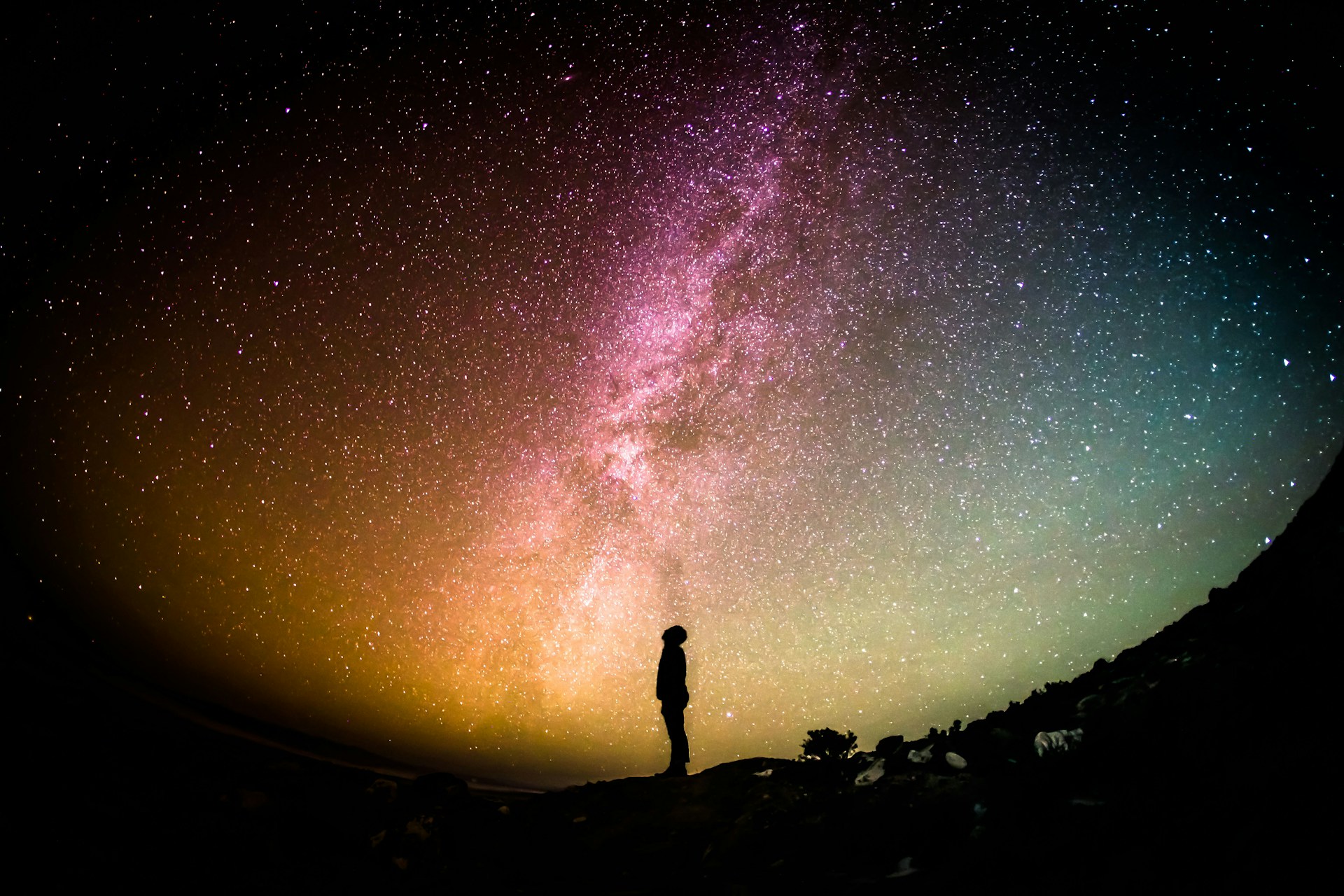
Cover photo by Greg Rakozy
A meteor shower or unusual object in the night sky can suddenly remind thousands of people to look up. Stargazing is accessible because it requires little equipment, yet it offers something increasingly rare: an activity that rewards patience rather than speed. You may wait twenty minutes and see nothing dramatic, then notice a satellite, a bright planet or the gradual appearance of more stars as your eyes adjust. The point is not to become an expert astronomer. It is to spend time outdoors with attention directed beyond immediate tasks and screens. With a little preparation, the experience can be comfortable, safe and genuinely restorative.
Choose darkness and comfort over perfection
The best site is not always the most remote one. Look for a place with a wide view of the sky, limited direct lighting and safe access. A dark corner of a park, beach or garden may be enough. Check opening hours, parking rules and local conditions before leaving. Bring a chair or mat, warm layer, water and insect protection. Lying still becomes unpleasant quickly when the ground is damp or the temperature drops. Comfort supports attention. If reaching a dark location requires a stressful drive or unsafe walk, observe from home and focus on the brightest objects instead.
Give your eyes time to adapt
Night vision improves gradually after moving away from bright light. Avoid staring at a white phone screen while waiting. Use a dim red-light setting when available, and reduce screen brightness before going outside. Many sky maps offer night modes, but learn the basic direction you need before arriving so the device does not dominate the session. During a meteor shower, a broad view is usually more useful than looking through a telescope. Let your gaze rest softly across the sky. The waiting is part of the activity, not an inconvenience between sightings.
Use weather and astronomy information wisely
Check cloud cover, moon brightness and the expected timing of the event. A famous shower may still be difficult to see if the moon is bright or clouds are thick. Treat forecasts as guidance rather than guarantees. Astronomy organizations and observatories are better sources than dramatic social posts promising a once-in-a-lifetime display. Also distinguish meteors from meteorites. A meteor is the streak of light seen when material enters the atmosphere, while a meteorite is material that reaches the ground. You do not need technical knowledge to enjoy the sky, but accurate expectations prevent disappointment.
Make the experience social without making it noisy
Stargazing can be shared with a partner, children or friends, but constant conversation and phone photography can crowd out the quiet that makes it distinctive. Agree to spend part of the time simply watching. Bring one warm drink, ask each person to identify a shape or direction and allow long pauses. Children may enjoy counting visible meteors or inventing constellations. Avoid bright flashlights near other observers. A small group often works better than a large gathering because it is easier to settle and listen to the environment around you.
Let observation replace performance
Not every meaningful activity needs a photograph or measurable achievement. Night-sky photography requires equipment and practice, and a phone may capture far less than your eyes can see. Decide whether documentation will improve the evening or turn it into a technical task. You might take one photograph of the setting, then put the device away. Notice temperature, sounds, the movement of clouds and how the sky changes as local lights switch off. This form of observation can interrupt the habit of evaluating every experience by what can be posted afterward.
Carry the slower attention into daytime
The value of stargazing does not depend on a spectacular event. It trains a style of attention that can be used elsewhere. On a walk, notice the direction of wind and the shape of leaves. During a commute, observe changing light rather than reaching immediately for the phone. At home, spend a few minutes near a window without adding entertainment. These pauses are not a cure for stress, but they create small spaces where the mind is not required to produce, compare or respond. Repetition matters more than intensity.
Conclusion
Stargazing offers a low-cost way to step outside ordinary urgency. Choose a safe, comfortable place, protect your night vision, use reliable forecasts and allow the session to be quiet and imperfect. Some nights will produce bright meteors, while others offer only a few stars between clouds. Both can be worthwhile. The deeper benefit comes from practicing patient attention and remembering that the world extends far beyond the stream of tasks and notifications waiting indoors.