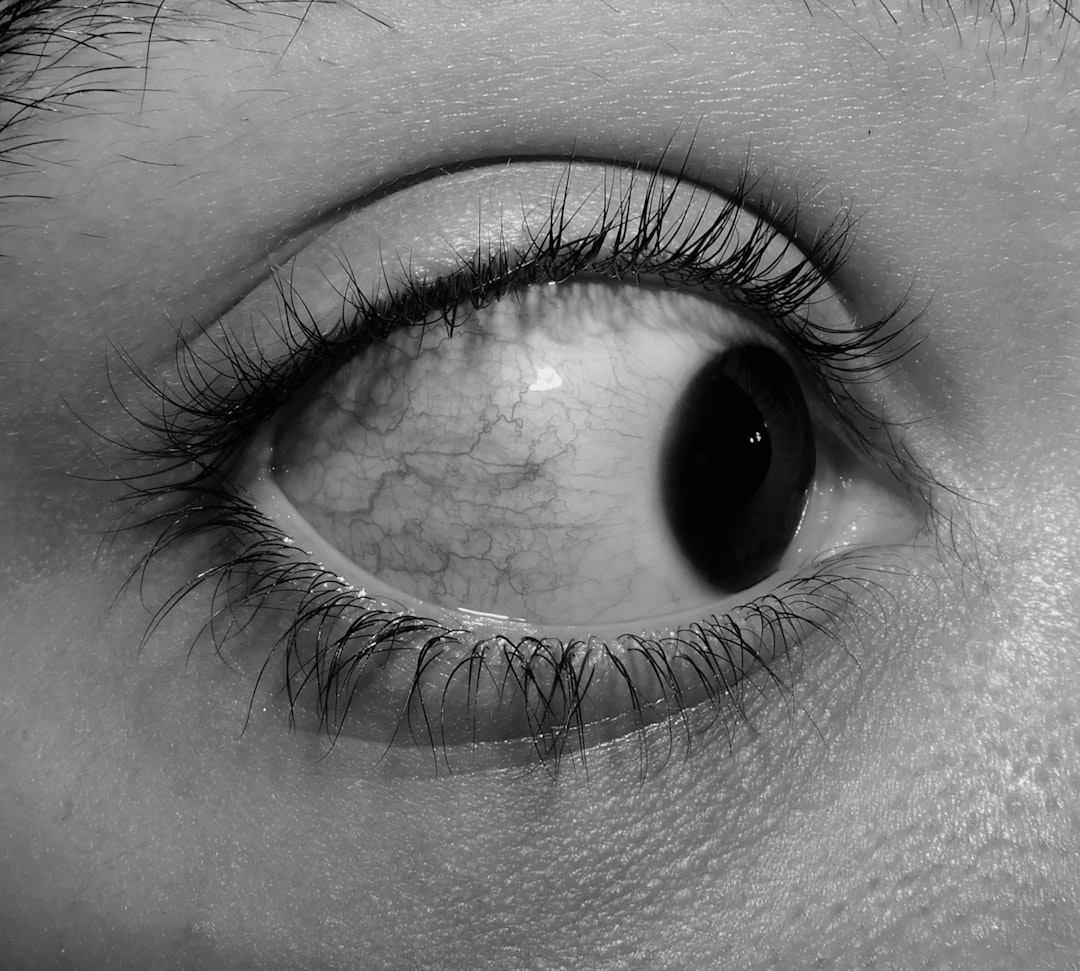
Cover photo by Menna Ahmed
Long hours on laptops and phones can leave the eyes feeling tired, gritty or dry, especially in air-conditioned offices, heated rooms or periods of low humidity. These sensations are common, but they can have many causes, including contact lenses, environment, medication and underlying eye conditions. General comfort measures can be useful for mild, occasional irritation, but persistent pain, significant redness, vision changes or worsening symptoms need professional assessment rather than repeated self-treatment. The practical goal for an ordinary screen-heavy day is not to eliminate every sensation or buy a drawer full of eye products. It is to reduce avoidable strain by changing how you use screens, how air moves around your workspace and when you give your eyes a break.
Blinking becomes less automatic when attention narrows
When people concentrate on screens, they may blink less fully or less often, which can contribute to a sensation of dryness. You do not need to count every blink. Instead, use natural pauses in work to look away from the screen and blink normally for a few moments. Reading a document, finishing an email or ending a meeting can become cues to shift visual distance. Looking across the room or out a window also gives the focusing system a change from continuous near work. These breaks do not need to be long enough to disrupt productivity. A short reset repeated throughout the day is easier to maintain than one elaborate eye exercise you remember only when discomfort is already strong.
Adjust the workspace before buying products
Screen position and room conditions can matter. Keep the display at a comfortable distance and height so you are not craning the neck or staring upward for hours. Reduce glare where possible and use text size that does not require squinting. Avoid placing a fan, heater or air-conditioning vent so that it blows directly at your face throughout the day. If the room is extremely dry, improving humidity may help overall comfort, but humidifiers require regular cleaning and should be used according to instructions. Good lighting matters too. A bright screen in a very dark room can feel tiring, while excessive reflected light can make text harder to read. Small environmental adjustments cost nothing and may solve more than another accessory.
Contact lenses may need a different routine on long days
Some contact lens users find that comfort decreases after many hours of screen work or in dry environments. Follow the wearing and replacement schedule recommended for your lenses, keep good hygiene and avoid extending wear simply because removing them is inconvenient. Glasses can be a useful alternative for part of the day if lenses become uncomfortable. Do not use products in the eye unless they are appropriate for your situation and compatible with contact lenses when relevant. Pharmacists, optometrists and other eye-care professionals can help clarify suitable options. Eye drops are not interchangeable, and a recall or warning affecting one product should be checked against the exact brand and batch rather than leading you to assume every similar product is unsafe.
Use screen breaks to help the rest of the body too
Eye discomfort often arrives alongside neck tension, shallow breathing and hours of sitting in one position. Make some visual breaks physical. Stand up, refill water, walk to another room or stretch while looking farther away. This gives the eyes a change of focus while also reducing the sense of being locked to the desk. Meetings that do not require continuous screen sharing can sometimes be taken while standing or walking. If your work allows it, alternate screen-heavy tasks with phone calls, paper reading or practical activities. The aim is not to avoid screens, which is unrealistic for many jobs. It is to create variation in how attention and posture are used across the day.
Know when simple measures are not enough
Occasional mild dryness after a long day is different from ongoing eye pain, marked redness, discharge, injury, sudden visual changes or symptoms that continue despite reasonable adjustments. Those situations deserve appropriate professional advice. Eye problems can look similar while having different causes, so internet symptom lists are not a reliable diagnosis. People who use prescription eye medication or have known eye conditions should follow the guidance of their clinician. General screen habits are best thought of as comfort and prevention measures, not treatment for unexplained symptoms. Seeking help when something feels significantly wrong is part of sensible self-care, not an overreaction. Another useful change is to review the rhythm of screen use outside work. If the eyes have already spent eight hours moving between spreadsheets, video calls and messages, an evening immediately filled with phone scrolling may extend the same visual demands. This does not mean screens are forbidden after work. Choose a little variety when discomfort is noticeable. Listen to music or a podcast while cooking, take a walk, talk to someone without another device open, or watch a larger screen from a comfortable distance instead of holding a phone close to the face. These substitutions can give the eyes and posture a different kind of evening without turning digital habits into a strict detox project. Comfort usually improves through repeated small changes, not one dramatic rule.
Conclusion
Screen-heavy days are easier on the eyes when the environment and routine contain a little variety. Look away regularly, let blinking return to normal, reduce direct airflow and glare, and use glasses when contact lenses become uncomfortable. Most importantly, keep common irritation in perspective while taking persistent or serious symptoms seriously. The goal is not perfect eye comfort every minute. It is to prevent an ordinary workday from creating unnecessary discomfort that follows you into the evening.